
09/18 17:25 2021
01/03 14:22 2026

業務でATECC608Aを使う機会があり、もうちょっとCレイヤーに入り込めたら実装できたであろう出来事があったため、素振りのため買ってみました。
今回は、下記について試してみました。
パッケージ

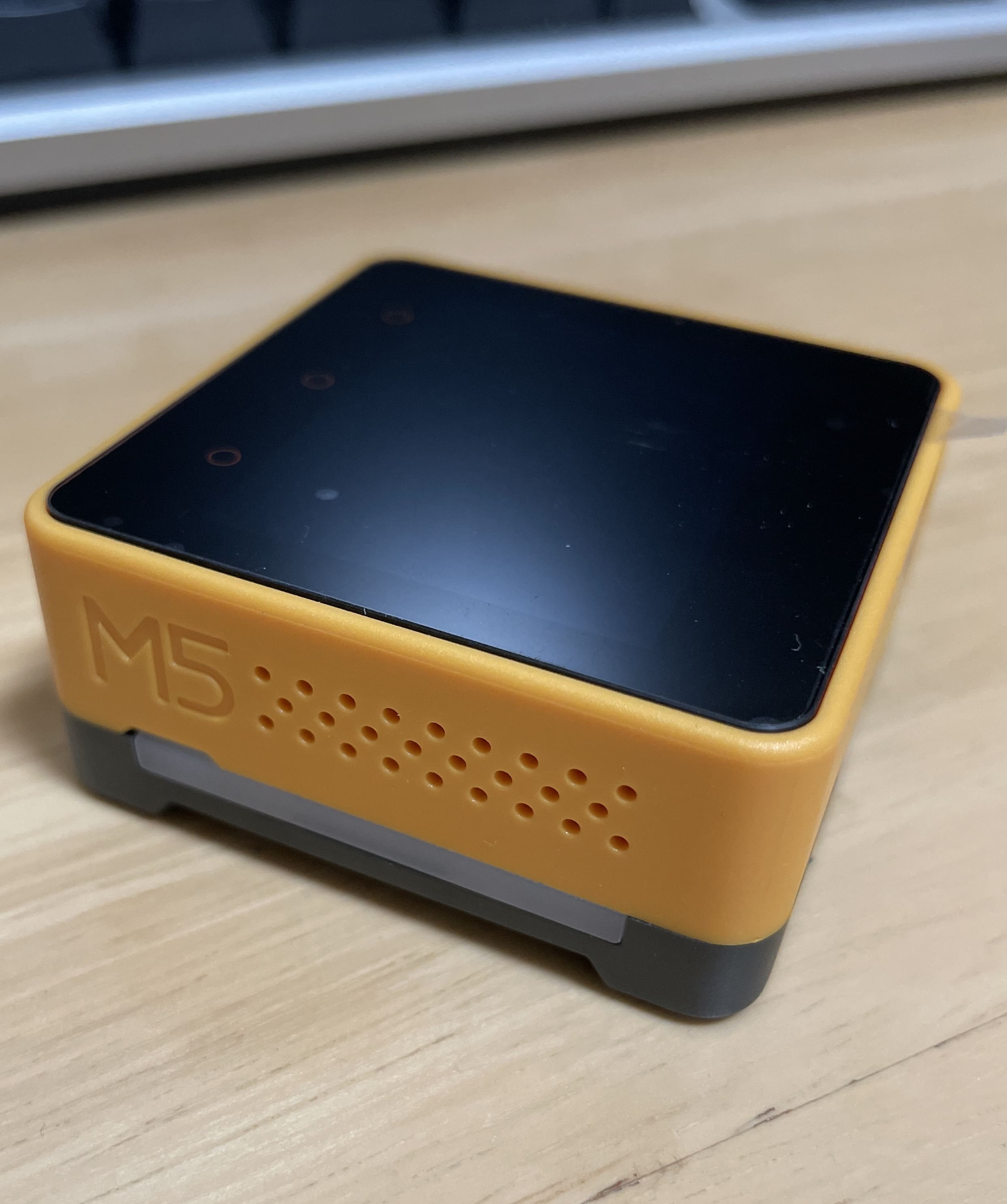
本体
AWSカラーがかっこいい(!)
内容物

AWS IoT EduKitに従って環境構築を進める。
Silicon Labs USB to UART bridgeのセットアップを参考にし、設定

インストーラーが起動します


ソースコードの取得 の手順は行いませんでした。変わりに、github.com/m5stack/Core2-for-AWS-IoT-EduKitをghqを利用して取得。
$ ghq get https://github.com/m5stack/M5Core2.git
スマートフォン向けアプリのダウンロードとインストールの通り実施
USBポートの確認を参考に、/dev/cu.SLAB_USBtoUARTをコピーします。


先ほどコピーした内容をgithub.com/m5stack/Core2-for-AWS-IoT-EduKit/Getting-Started/platformio.iniに追加
-; upload_port =
+upload_port = /dev/cu.SLAB_USBtoUART
; AWS IoT EduKit Getting Started PlatformIO Configuration File
[platformio]
src_dir = main

[env:core2foraws]
platform = espressif32@3.2.0
framework = espidf
board = m5stack-core2
monitor_speed = 115200
upload_speed = 2000000
board_build.f_flash = 80000000L
board_build.flash_mode = dio
build_unflags = -mfix-esp32-psram-cache-issue

; If PlatformIO does not auto-detect the port the device is virtually mounted to,
; uncomment the line below to set the upload_port (remove the ";") and paste the
; copied port you identified from PIO Quick Access menu --> PIO Home --> Devices
; after the equal sign. You do not need to add quotes
;(e.g. upload_port = /dev/cu.SLAB_USBtoUART).
;
upload_port = /dev/cu.SLAB_USBtoUART


; Custom partition file
board_build.partitions = partitions_4MB_sec.csv

; Files to include in upload to non-volitile storage (nvs flash)
board_build.embed_txtfiles =
  components/esp_rainmaker/server_certs/rmaker_mqtt_server.crt
  components/esp_rainmaker/server_certs/rmaker_claim_service_server.crt
  components/esp_rainmaker/server_certs/rmaker_ota_server.crt

; Please visit documentation for the other PlatformIO
; configuration options and examples
; http://docs.platformio.org/page/projectconf.html
ターミナルを開きます。本手順でTerminalを開かないとpioコマンドが利用できない

ファームウェアのビルド
pio run --environment core2foraws
ビルドしたファームを転送
pio run --environment core2foraws --target upload
自分がM5Stackに対して行ったタッチ操作などイベントを監視可能
pio run --environment core2foraws --target monitor
デバイスのファームウェアを消去
pio run --environment core2foraws --target erase
そのままだと、前のファームが動いている状態。再起動するとディスプレイには何も映らない。そしてプチプチ変な音がする。。(これは私だけかもしれない..)

保存場所を自分で決めたい場合、Locationのチェックボックスを外します。画像では見えてませんが、Finishボタンを押下します。

プロジェクトが作成され、自動的にVSCodeで作成したプロジェクトが開きます。
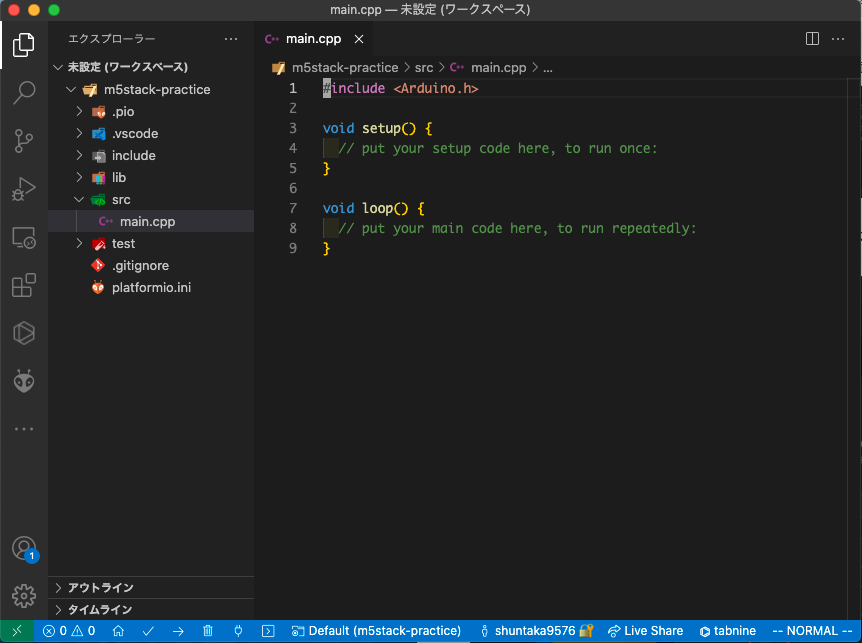
※ ファイルの変更を管理したい場合は、この段階でgitで初期化した方が良いです。このあとライブラリ追加した際に、設定ファイルの変更差分が追いやすいです。
基本的にVSCodeとPlatformIOでM5Stack Core2開発の記事と同様なので、原文の方をご参考にした方が良いです。
M5Core2で検索


M5Core2を追加したのと同じ手順で、LovyanGFXを追加します。
LovyanGFXで検索
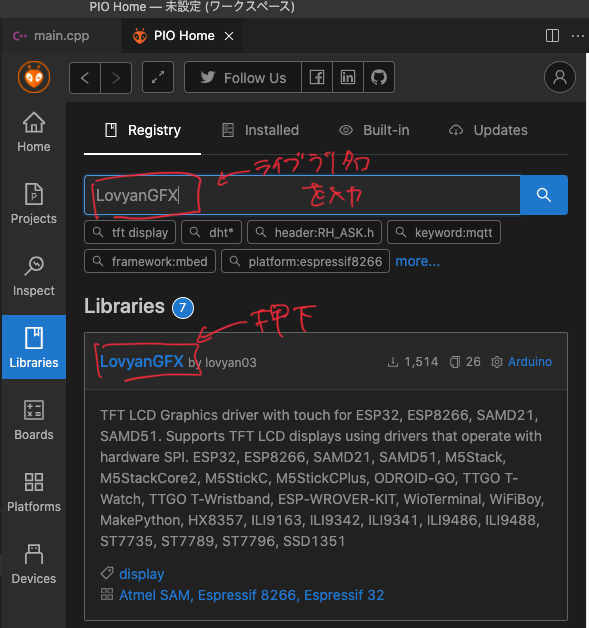

追加完了すると下記のメッセージが通知されるみたい。{リポジトリルート}/.pio/libdeps配下に追加されていることが分かる

追加ライブラリが、lib_depsオプションの中に自動で追記されます。依存管理が捗るので助かります。
; PlatformIO Project Configuration File
;
;   Build options: build flags, source filter
;   Upload options: custom upload port, speed and extra flags
;   Library options: dependencies, extra library storages
;   Advanced options: extra scripting
;
; Please visit documentation for the other options and examples
; https://docs.platformio.org/page/projectconf.html

[env:m5stack-core2]
platform = espressif32
board = m5stack-core2
framework = arduino
lib_deps =
	m5stack/M5Core2@^0.0.6
	lovyan03/LovyanGFX@^0.4.2
upload_port = /dev/cu.SLAB_USBtoUART
#include <M5Core2.h>

// the setup routine runs once when M5Stack starts up
void setup(){

// Initialize the M5Stack object
M5.begin();

// LCD display
M5.Lcd.print("Hello M5Stack");
}

// the loop routine runs over and over again forever
void loop() {

}
platformioのPROJECT TASKSからBuild -> Uploadを順に実行します

出力されました!LovyanGFXはsrc/main.cppにはないですが、内部的に活用されています。

また進捗があったら、別途記事を書こうと思います!以降はおまけです。
最初こちらで環境構築しましたが、VSCodeの方が便利だったので没にしました。
M5STACK公式で提供されているQUICK STARTに従って環境構築を進める。タブでCore2シリーズを選択。

Mac OSの場合、インストールする前に[システム環境設定]-> [セキュリティとプライバシー]-> [一般]を確認し、「AppStoreと確認済みの開発元からのアプリケーションを許可」になっていることを確認

MacOSのデバイスドライバーを選択
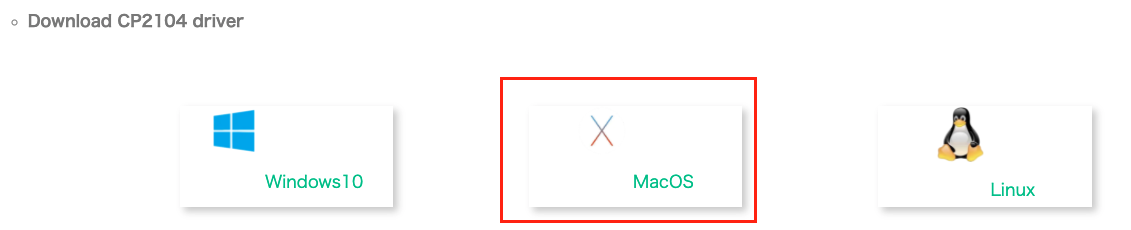
選択すると下記のzipファイルがダウンロードされます

解凍するとdmgファイルになります

pkgファイルをダブルクリックします

インストーラーが立ち上がるので、ポチポチしていきます


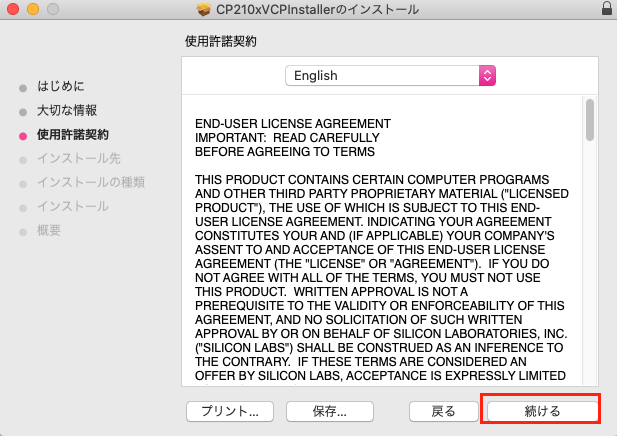

インストール中にブロックされたので、セキュリティとプライバシーからインストールを許可設定をしました(Macのインストールあるあるですね)

インストール完了!

M5STACK公式に書いてある通り、Arduino-IDEを引き続きインストールしていきます

172MBある

解凍して、Arduino.appを立ち上げます

Preferencesを選択します
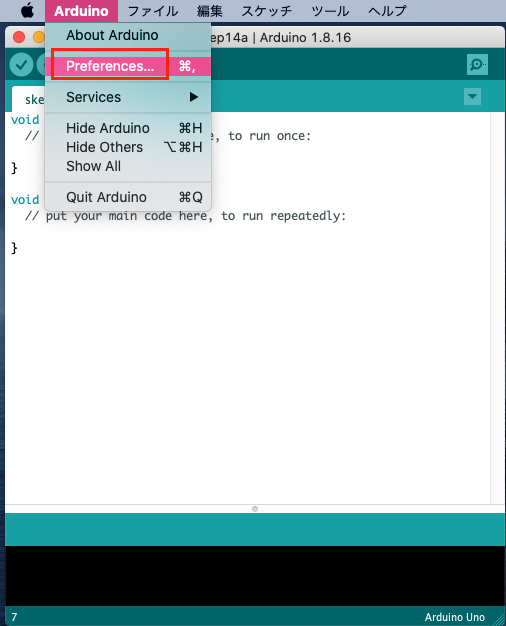
追加のボードマネージャのURLに、https://m5stack.oss-cn-shenzhen.aliyuncs.com/resource/arduino/package_m5stack_index.jsonを追加


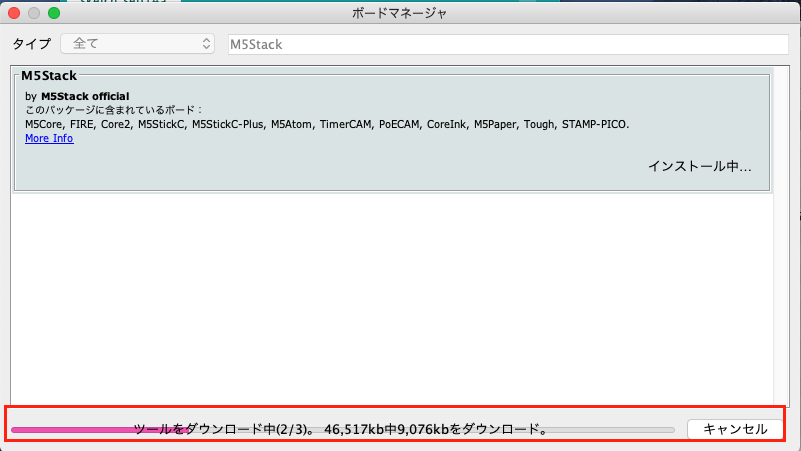
検索窓にM5Stackを入力し、インストールを押下

インストールが開始されると画像のように、進捗バーが表示される(初回インストールが始まらず、アプリを再起動して再度インストールを実施)
ボードにM5Stack-Core2を選択

ライブラリ管理を選択
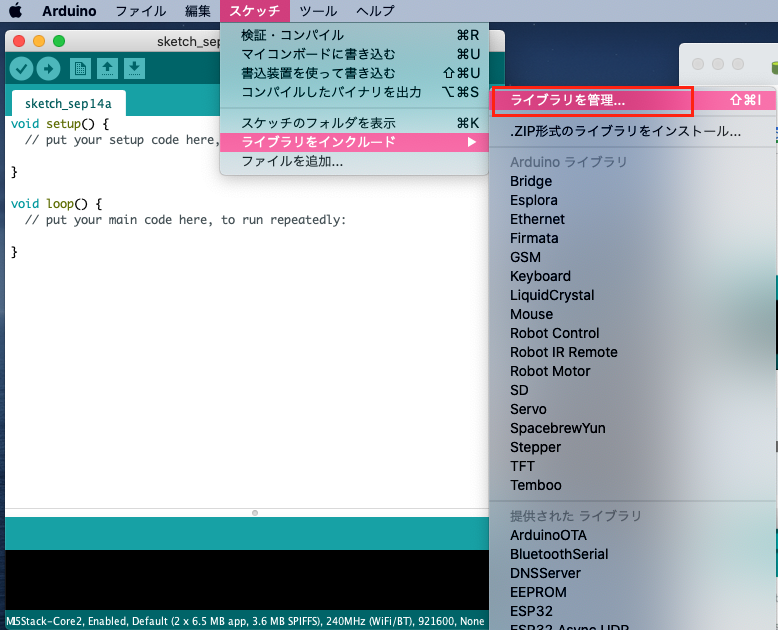
検索窓にM5Core2を入力し、インストールを押下
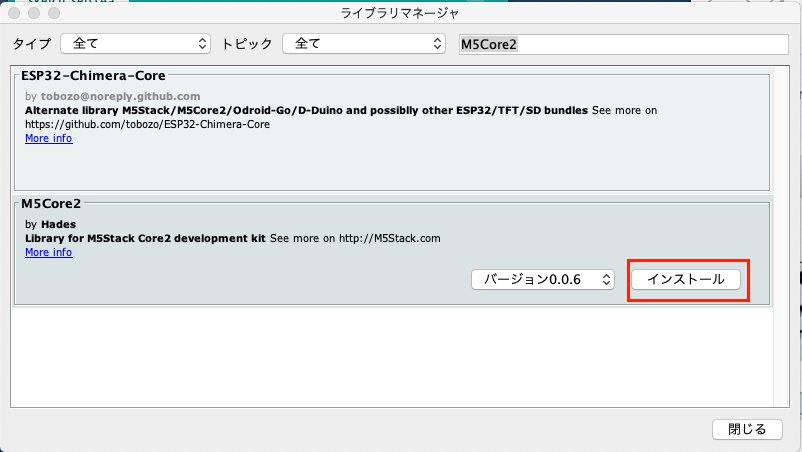
install allを選択

インストールが開始されます(初回no protcolとエラーメッセージが出力され失敗。アプリを再起動して再度インストールを実施)

M5STACK公式の手順でこちらがあるのは助かります。。
前の手順(M5Core2インストール)と同様に、ライブラリマネージャを開き、検索窓にFastLEDと入力。インストールを押下

※ M5スタック公式にはない手順です。M5Core2リポジトリをcloneします。
$ ghq get https://github.com/m5stack/M5Core2.git
zipファイルを追加します

手順通り、cloneしたリポジトリM5Core2/examples/core2_for_aws/配下に、ArduinoECCX08.zipがあるので選択します

インストールしたライブラリを確認します
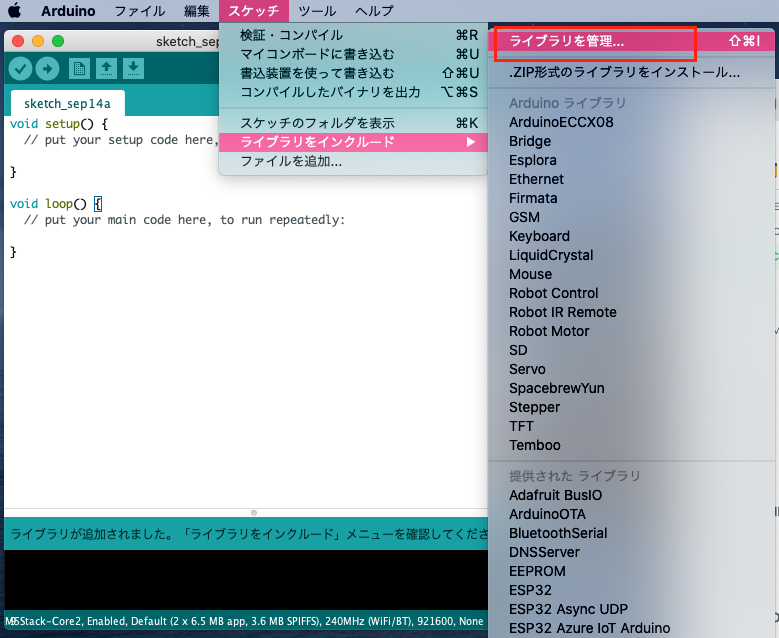
インストール済みに絞ります

ArduinoECCX08.zipを追加したことで下記のライブラリが追加されたと推測(ECC608関連のライブラリはインストール済みのライブラリに対して検索すると、こちら以外にもあるため違う可能性あり)
